
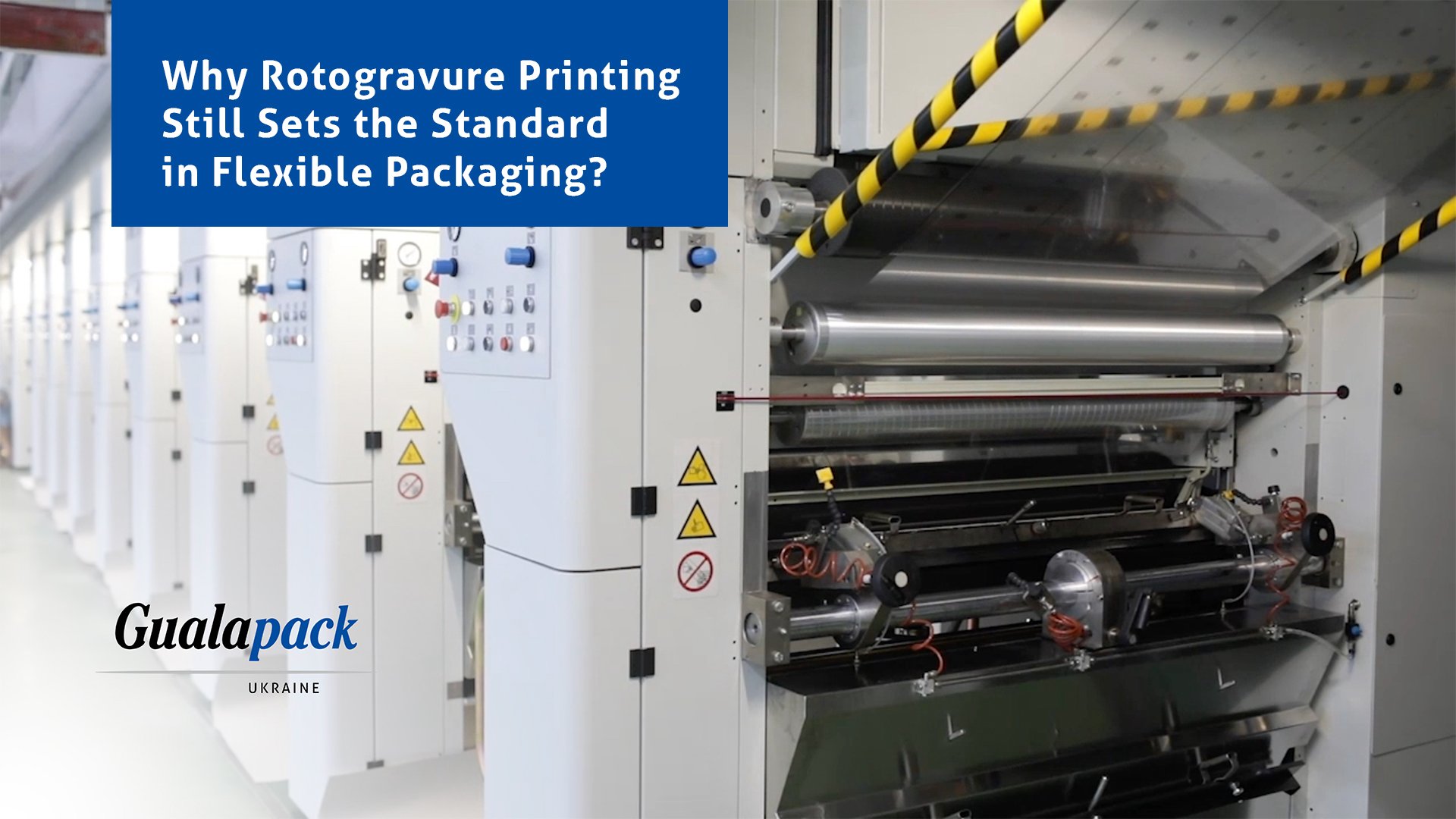
A million or more packages. That is exactly how many packages a rotogravure press can produce — with the final print matching the first in every detail, without any visible variation. This unmatched consistency is precisely why rotogravure printing remains the preferred choice of the world’s leading food packaging manufacturers.
How it works
Rotogravure printing is based on a metal cylinder engraved with millions of microscopic cells. The depth and volume of each cell determine the amount of ink transferred to the substrate: the larger the cell, the greater the ink deposit and the stronger the colour intensity.
The process works as follows: the cylinder rotates through an ink reservoir, after which a doctor blade removes excess ink from its surface, leaving ink only inside the engraved cells. Under pressure, the ink is then transferred directly onto the printing substrate.
The cylinders themselves are produced through a multi-stage manufacturing process that indicates a steel core, copper coating, precision mechanical or laser engraving, and a final chrome coating for enhanced wear resistance. As a result, a single cylinder can deliver several million impressions while maintaining exceptional print consistency.
Low-viscosity inks, typically solvent-based, are used in the process. They dry rapidly in dedicated drying units between printing stations, enabling production, outstanding print quality, and exceptionally high operating speeds.
Key advantages of rotogravure printing
Rotogravure printing offers three key advantages that define its role in the production of flexible packaging.
1. Superior image reproduction. The technology delivers exceptional detail, photographic-quality images, and smooth tonal gradations that are difficult to achieve with most alternative printing methods. Few printing technologies can reproduce complex halftones with the same level of precision and consistency.
2. Consistent colour throughout the print run. Because the volume of each engraved cell on the cylinder is fixed, the amount of ink transferred to the substrate remains constant from the first impression to the last. This ensures outstanding colour stability across even the longest production runs.
3. Exceptional durability. Rotogravure is engineered for industrial-scale manufacturing. A single chrome-plated cylinder can produce several million impressions while maintaining consistent print quality. This makes the technology one of the most cost-effective and reliable solutions for high-volume packaging production.

Pre-press preparation: what happens before the press starts
One of the defining characteristics of rotogravure printing is its meticulous pre-press preparation. Cylinder production takes time and demands exceptional precision: files undergo colour separation, halftoning and colour profile verification. The cylinders are then mechanically engraved. Depending on the design specifications, the required level of image detail and the presence of fine elements, either standard mechanical engraving or Extreme Engraving technology is used. The most suitable method is selected on a case-by-case basis to meet the specific requirements of each design and achieve the desired visual result.
Before the print run begins, a test print is always produced to verify colour accuracy. This process requires highly skilled specialists and close collaboration between the design and production teams. However, it is precisely this meticulous preparation from the very beginning that ensures a flawless result in the final print.
Rotogravure printing in packaging production
This printing method is primarily used for flexible packaging. Rotogravure printing enables the reliable and efficient processing of films, laminates, foil and paper. This is why it is so widely used in the production of packaging for baby food, snacks, coffee, frozen foods, dairy products, confectionery and pet food.
However, its applications extend far beyond the food industry. Rotogravure printing is also widely used to produce packaging for household chemicals, cosmetics and pharmaceutical products. In other words, it is the preferred printing method for industries where consistent print quality across every production run is essential and where packaging materials must withstand demanding conditions, including humidity, temperature fluctuations, and contact with fats or aggressive substances.
Quality you can see and feel
The end consumer rarely thinks about the printing technology behind the products displayed on supermarket shelves. Yet they can instantly recognize the difference between bright, rich, vibrant graphics and packaging that appears dull, blurred or unevenly printed.
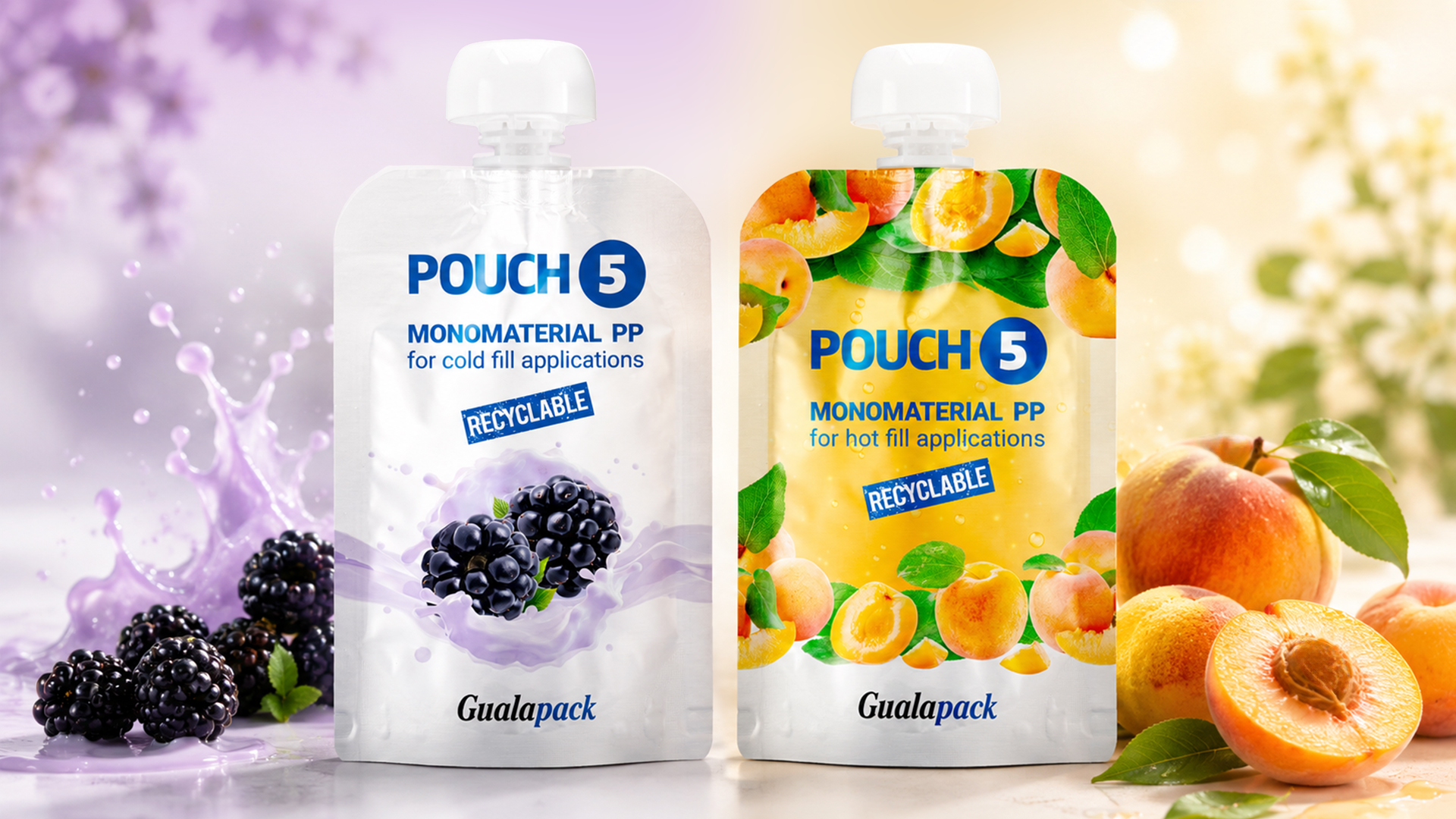
Rotogravure is the technology that gives packaging a truly premium appearance. Sharp contours, vibrant colours and smooth tonal transitions all help shape consumers’ perception of a product before they even pick it up. In today’s highly competitive retail environment, this has a direct impact on commercial success.
Modern rotogravure printing
Although this technology has been in use for more than a century, it continues to evolve. Modern engraving systems work directly with digital files, delivering greater precision and faster cylinder preparation. Real-time quality control systems detect even the smallest deviations during printing, preventing defects before they affect production.
At the same time, ink technologies continue to advance. Low-solvent formulations and water-based systems are being developed to meet increasingly stringent environmental regulations and support manufacturers in reducing emissions throughout the production process.
For forward-thinking manufacturers, rotogravure printing is far more than a way of applying graphics to packaging. It is an investment in consistency: the same outstanding quality on the first print as on the millionth, predictable results, and packaging that looks just as impressive a year after launch as it did on day one.