
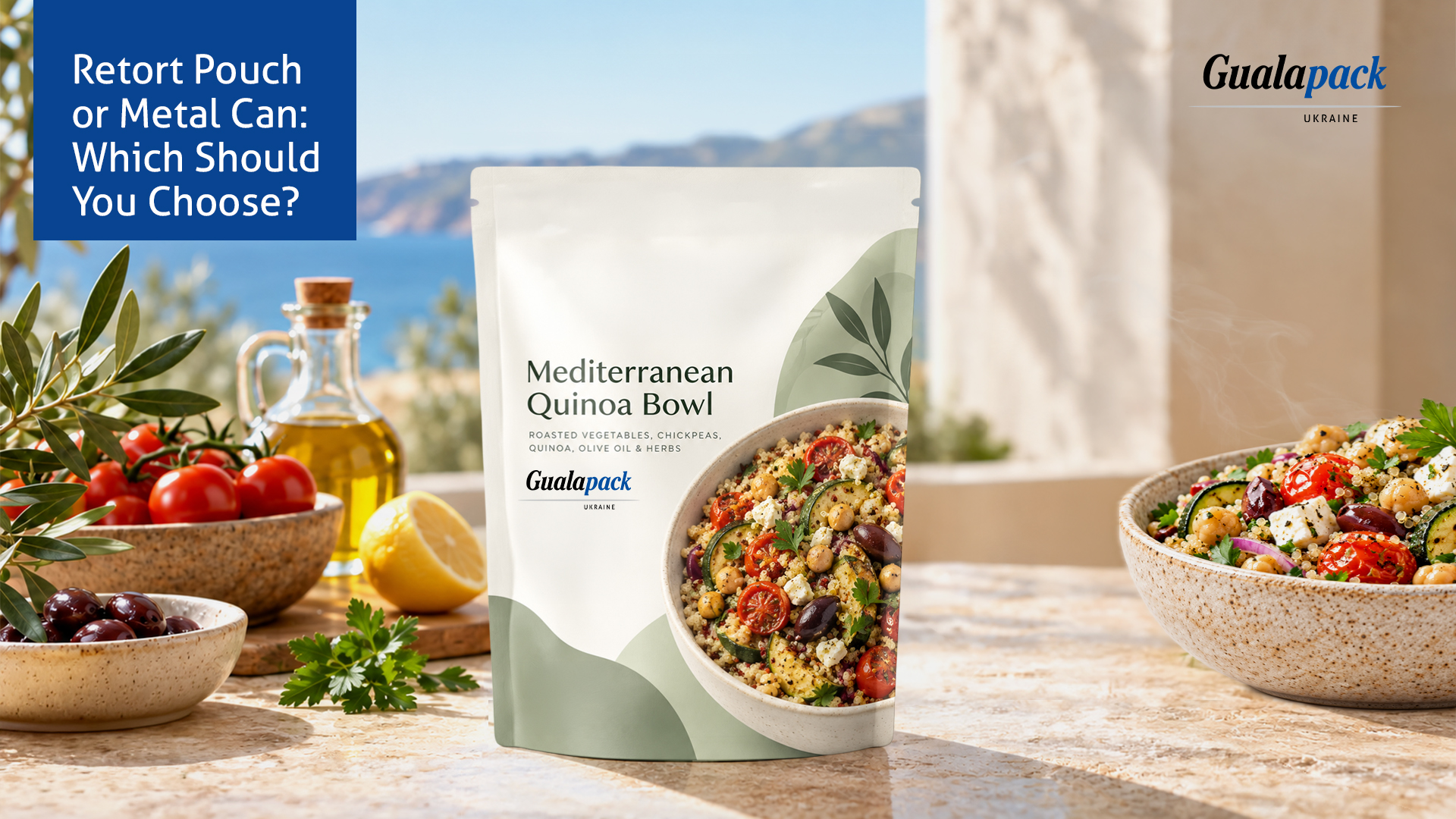
For an ever-increasing number of consumers, being able to quickly open and reheat ready-to-eat meals is becoming part of their daily routine. At the same time, packaging requirements are evolving: it must not only protect the product, but also ensure long-term shelf stability, ease of use and efficient logistics.
One solution for this category is the retort pouch — a flexible packaging format designed to withstand thermal processing after the product has been hermetically sealed inside. In terms of product is preserved, the retort pouch is similar to a can, but it has a different design and offers a number of practical advantages.
From “cook” to “reheat”: the trend for ready-to-heat food in Europe
Changes in consumers’ eating habits are driving growing demand for ready-to-heat and ready-to-eat products.
According to McKinsey`s 2025 research, in Europe, 42% of Generation Z (Gen Z) and 37% of millennials buy ready-to-eat meals at least once a week. Overall, 77% of Gen Z and 72% of millennials purchase food-to-go at least once a month. The research also shows that younger generations cook at home less frequently than older ones.
This trend is set to continue. According to a 2026 McKinsey study, 82% of Generation Z consume ready-to-heat-and-eat meals at least once a month, while the foodservice sector is growing two percentage points faster than traditional food retail.
For manufacturers, this means growing demand for products that require minimal preparation at home. Soups, porridges, stews, meat dishes, sauces and other ready-to-eat products can be brought to serving temperature in a matter of minutes.
Alongside the ready-meals category, the packaging designed for these products is also evolving.
Gen Z consume ready-to-heat-and-eat meals at least once a month, and the foodservice segment is growing two percentage points faster than traditional grocery retail.
For manufacturers, this means the growth of a product category that doesn’t require lengthy preparation at home. Soups, porridges, stews, meat dishes, sauces, and other ready-to-eat products can be prepared for consumption in a matter of minutes.
And along with the ready-to-eat category, packaging for these products is also evolving.
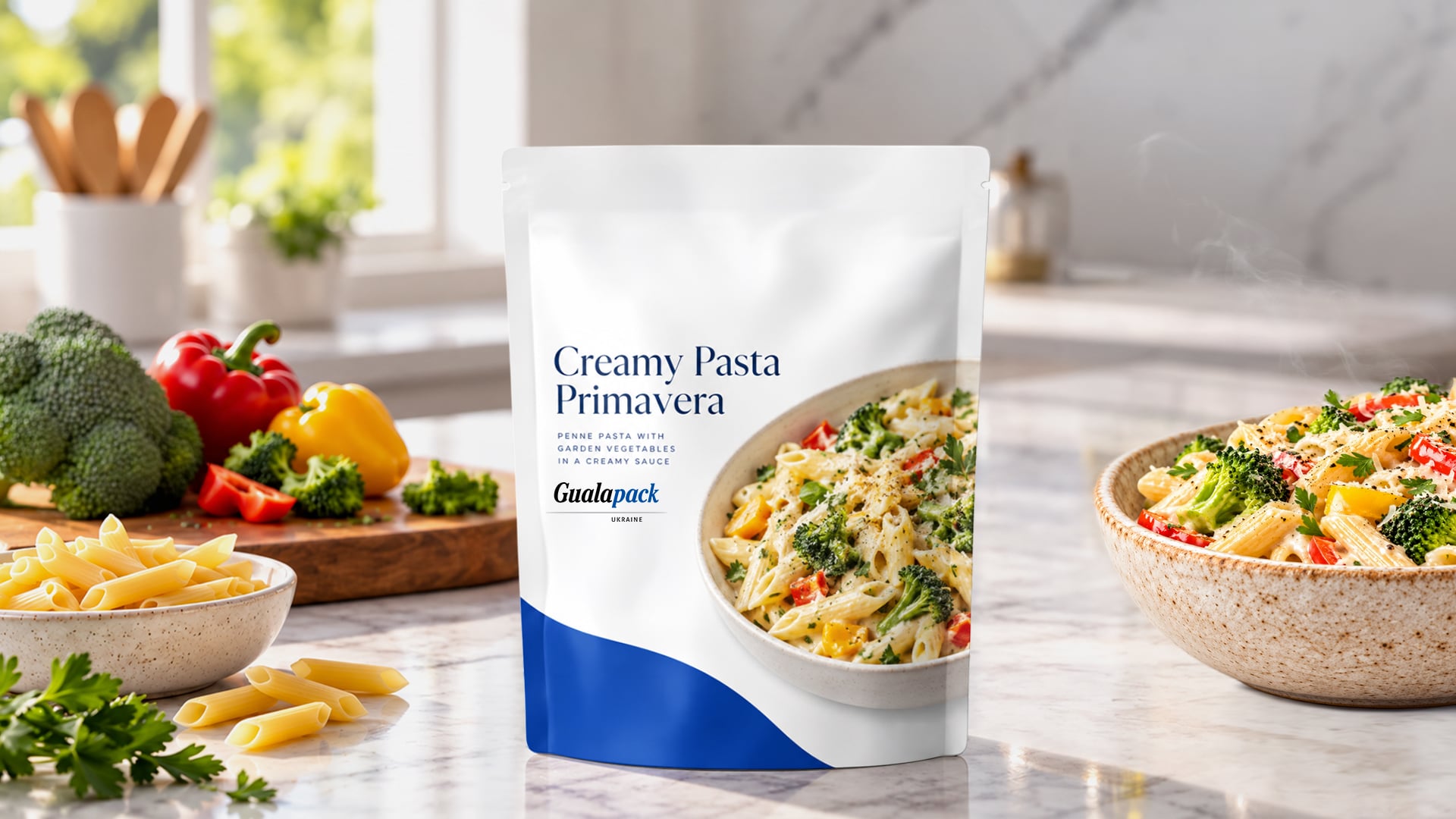
What products are packaged in retort pouches?
Retort technology is suitable for a wide range of products that require thermal processing and long-term shelf stability.
Among the most common categories are:
- soups and broths;
- porridges and cereal dishes;
- meat dishes and prepared meat products;
- pâtés;
- ready-made sauces and dressings;
- dishes for the HoReCa sector;
- other ready-made meals requiring retort processing.
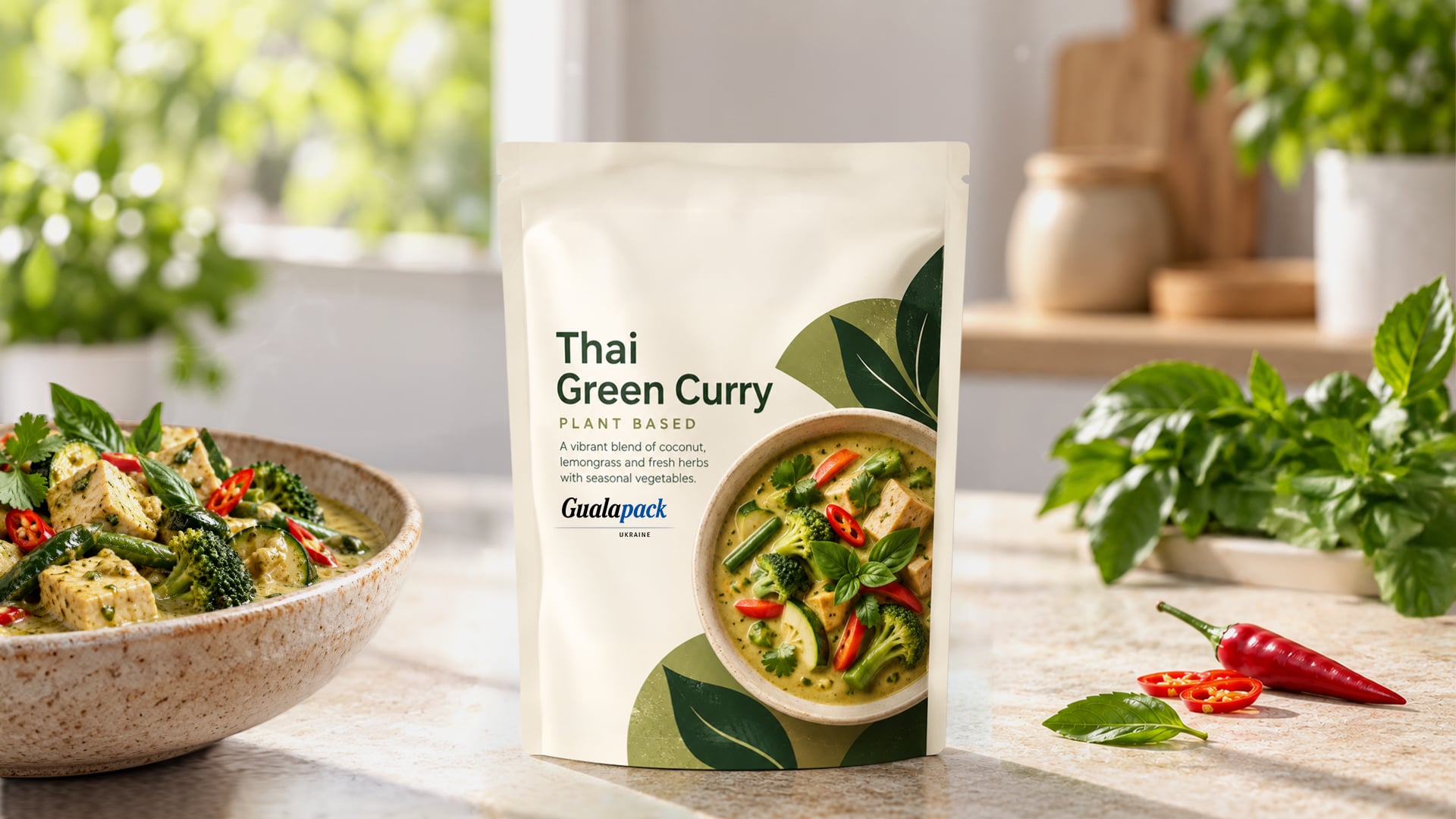
Gualapack Ukraine also offers retort pouches for soups and broths, porridges, pâtés, prepared meat products, HoReCa products and ready-made dressings. A retort pouch is not limited to a single product category: it can accommodate a broad range of ready meals. For each product, we select the optimal laminate structure to provide the required barrier properties and help preserve the product’s quality throughout its intended shelf life.
Retort packaging — a modern alternative to the can
In terms of its function, retort packaging largely serves the same purpose as a can: the product is hermetically sealed and then subjected to heat treatment in a retort—specialized equipment for thermal sterilization. Typical sterilization temperatures are approximately 116–121 °C, although the exact parameters depend on the product formulation, packaging structure and processing conditions. After retort processing, the product can be stored at room temperature without refrigeration.
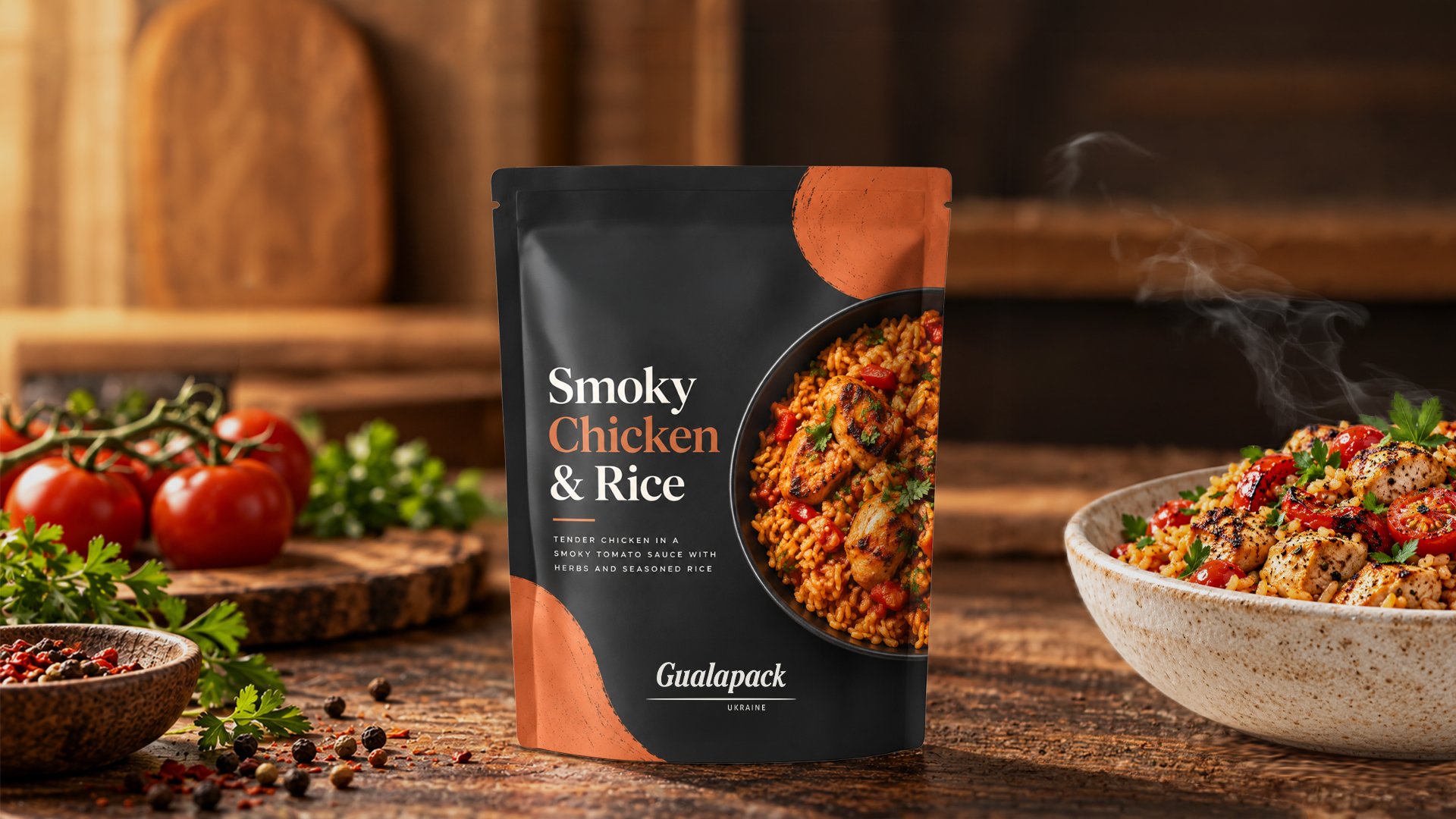
However, the flexible pouch format offers several advantages compared with a rigid metal can.
Lighter weight
A flexible pouch weighs significantly less than a metal container of comparable capacity. This reduces the overall weight of the finished product during transportation and makes the packaging more convenient for consumers to handle.
Compactness
Unlike a rigid can, a flexible pouch can be transported and stored more efficiently, requiring less space throughout the logistics chain.
Faster heating
The flat profile of the pouch enables more efficient heat transfer during sterilization. Because the product layer is relatively thin, it reaches the required sterilization temperature faster than in a conventional metal can. This can reduce the overall thermal load on the product, helping to better preserve its flavor, texture, and nutritional properties.
Consumer Convenience
The flexible pouch is easy to carry, open, and use both at home and on the go. Additional features can further enhance convenience, including zip-lock closures, tear notches, Euro slots, and other functional design solutions.
|
Parameter |
Retort pouch |
Metal can |
|
Package weight |
Lower package weight |
Significantly heavier than a retort pouch |
|
Storage volume |
Compact, with efficient pallet utilisation |
Rigid shape, with Significantly heavier than a retort pouch more unused space |
|
Heating speed |
Faster due to the flat profile and shorter heat-peneration distance |
Slower due to the greater product thickness and heat-peneration distance |
|
Impact on taste |
Lower thermal impact can help preserve flavour and product quality |
Longer thermal exposure can have a greater impact on flavor and texture |
|
Opening |
Easy-open notches, laser scoring, or other keyless solutions |
Requires a key or can opener, depending on the can design |
|
Additional options |
Zip closure, Euro slot, handle, and other functional features |
More limited Lower thermal impact can help preserve flavour and product quality |
|
Logistics |
Lower weight and more efficient use of space can help reduce transportation and handling costs |
Higher weight and less efficient use of space can increase transportation and handling costs |
Ready-to-eat meals in retort pouches from Gualapack Ukraine
Retort pouches combine extended shelf-life without refrigeration with the advantages of flexible packaging: lower weight, efficient use of space in logistics, and convenience for the consumer. Gualapack Ukraine selects the laminate structure based on the specific product, filling conditions, and sterilization technology.
Send us the product type, serving weight, and sterilization parameters — we’ll recommend the appropriate structure and format.